How to Choose the Best Temporary Fence for Your Project
Choosing the right temporary fencing depends on project risk, duration, environment, and compliance requirements. In Australia, selecting the wrong fencing solution can lead to safety issues, regulatory breaches, or costly changes mid-project. This guide explains how to assess your site and choose fencing that is fit for purpose.
What Are Common Mistakes When Choosing Temporary Fencing?
Common issues include:
- Choosing fencing based on cost alone
- Underestimating wind exposure
- Using low-risk solutions on high-risk sites
- Failing to account for project duration
- Ignoring local authority conditions
Avoiding these mistakes reduces rework, safety incidents, and compliance risk.
What Is the First Thing to Consider When Choosing Temporary Fencing?
The first consideration is why the fencing is required.
Temporary fencing may be used to:
- Prevent unauthorised access
- Protect the public from hazards
- Control movement at events
- Secure equipment and materials
If fencing is being installed to meet a legal or permit requirement, compliance must guide the choice—not cost or convenience.
For a full overview of when fencing is required and why, see: The Ultimate Guide to Temporary Fencing
How Does Project Type Affect Fencing Choice?
Different projects present different risks and exposure levels.
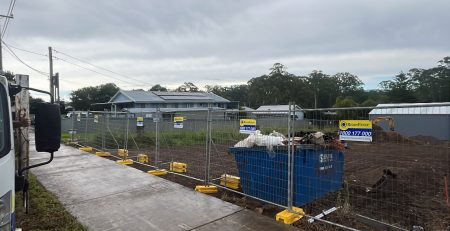
Construction and Civil Works
- Require robust, stable fencing
- Often exposed to wind, traffic, and public interaction
- May require higher compliance configurations
Public Events and Crowd Control
- Focus on safe pedestrian flow and visibility
- Often temporary and time-sensitive
- Layout flexibility is critical
Schools, Councils, and Public Spaces
- Higher duty of care
- Greater emphasis on child safety and public protection
- Often subject to local authority conditions
Project type determines fence height, strength, visibility, and installation method.
What Site Conditions Should Be Assessed?
Before selecting fencing, assess:
- Ground conditions (level, paved, uneven)
- Wind exposure and weather patterns
- Space constraints and access points
- Proximity to pedestrians or traffic
Sites with higher wind exposure or public access typically require additional bracing, ballast, or upgraded configurations.
How Long Will the Fencing Be Needed?
Project duration directly impacts fencing choice.
- Short-term projects may prioritise speed and flexibility
- Long-term projects require durability, stability, and ongoing maintenance
- Multi-phase projects may require fencing to be relocated or reconfigured
Longer durations increase the importance of inspection, maintenance, and compliance planning.
How Do You Decide Which Temporary Fencing Option Is Suitable?
Rather than choosing fencing by product type alone, decisions should be based on risk level, site exposure, and duration.
The key question is not what fencing exists, but what level of control the site requires.
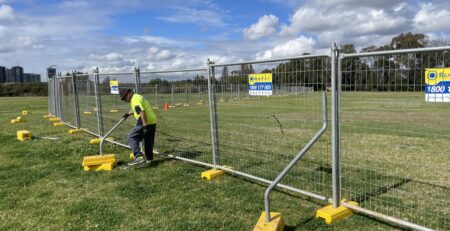
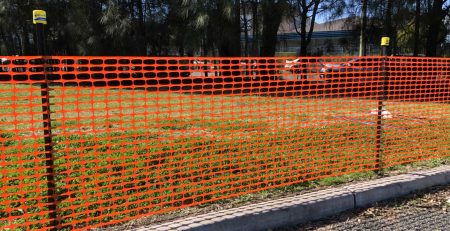
Low-Risk, Short-Duration Sites
Examples include landscaping works, service maintenance, or minor utility upgrades.
Key decision factors:
- Clear visual warning is sufficient
- Limited public interaction
- Minimal wind exposure
- Short installation period
In these cases, lighter, highly visible fencing solutions are often appropriate.
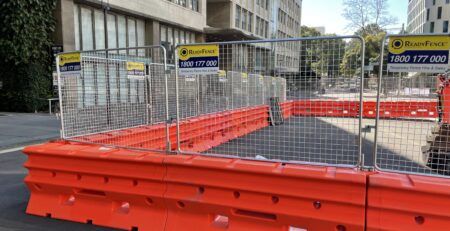
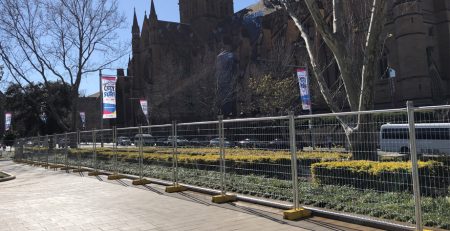
Medium-Risk Sites with Public Proximity
Examples include event perimeters, schools, footpath works, or council projects.
Key decision factors:
- Need to guide or restrict pedestrian movement
- Higher duty of care
- Temporary but structured layouts
- Compliance with council or permit conditions
These sites require more robust boundary control and stable installation methods.
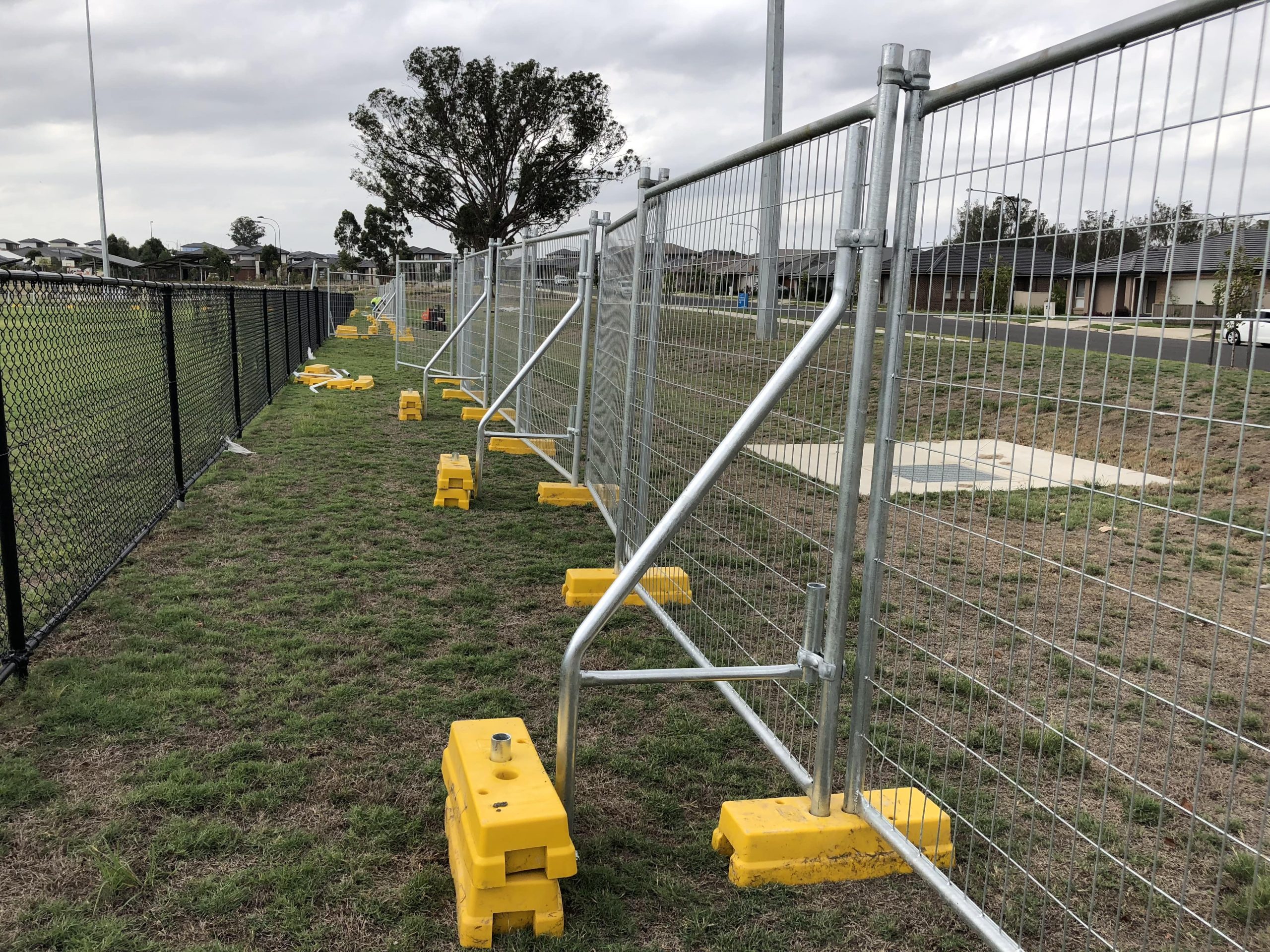
High-Risk or Long-Term Construction Sites
Examples include commercial construction, infrastructure projects, or demolition sites.
Key decision factors:
- Ongoing public exposure
- Wind loading and environmental stress
- Asset protection requirements
- Regulatory and audit scrutiny
These environments typically require engineered fencing solutions, additional stabilisation, and higher compliance configurations.
How Do Compliance Requirements Influence the Choice?
In Australia, temporary fencing must comply with Work Health and Safety laws, Australian Standards, and local council conditions.
Some projects require:
- Specific fence heights
- Anti-climb features
- Increased stability measures
- Compliance with higher-risk configurations, such as Configuration 19
If fencing is part of a permit or safety plan, selecting a non-compliant solution can result in delays or enforcement action.
For detailed legal context, refer to: Temporary Fencing Laws & Safety Regulations in Australia
How to Make the Right Decision
The best temporary fencing solution balances:
- Safety and compliance
- Site conditions and duration
- Practical installation needs
Planning fencing early, alongside site layout and risk assessments, helps ensure a smoother project delivery.
Pros & Cons of Key Temporary Fencing Options
| Fencing Type | Pros | Cons |
| Heavy Mesh Panels | Highly secure, meets standards | Heavy, professional install |
| Crowd Control Barriers | Portable, easy setup | Less secure for restricted zones |
| Pool Safety Fencing | Legally compliant, child-safe | Must meet strict regulations |
This table helps weigh the trade-offs depending on your priority (security, mobility, regulation).
Final Considerations
- Match fencing choice to site risk, not just cost
- Consider weather and terrain for panel stability
- Plan for inspection and maintenance
- Use internal stakeholders (safety, project, compliance) when selecting fencing
A collaborative approach ensures you choose fencing aligned with risk exposure and operational needs.
Conclusion
The right temporary fencing protects people, equipment, and compliance outcomes. By identifying your project’s specific needs and balancing strength, mobility, and compliance requirements, you’ll choose a solution that supports safety and operational success. For detailed compliance information, see Temporary Fencing Laws & Safety Regulations in Australia and for overall context, refer to The Ultimate Guide to Temporary Fencing.
At Ready Fence, we provide customised temporary fencing solutions for construction and civil sites, events, security, and more. With hire and purchase options, we ensure compliance, safety, and durability for all project types.