How Is Temporary Fencing Secured on Site? A Complete Guide
Temporary fencing is one of the most essential safety tools on any Australian worksite or event — but it only works if it’s properly secured. A fence that leans, shifts, or topples is not just ineffective; it’s a genuine hazard and a potential liability under Australian Work Health and Safety (WHS) legislation.
So what does “properly secured” actually mean? How does temporary fencing stay upright across busy construction sites, large-scale public events, and everything in between?
In this guide, the team at Ready Fence breaks down every method used to anchor, stabilise, and reinforce temporary fencing — from the basics of ballast feet through to compliance with Australian Standard AS 4687.
What Makes Temporary Fencing Different from Permanent Fencing?
Before getting into securing methods, it’s worth understanding what sets temporary fencing apart structurally.
Standard temporary fencing panels, like those available through Ready Fence’s hire and sales range — are galvanised steel mesh panels, typically 2.4 metres wide by 2.1 metres high. They are designed to:
- Interlock with adjacent panels using couplers or clamps
- Sit in free-standing support feet — not embedded in the ground
- Be erected and dismantled quickly without excavation or concrete footings
- Be relocated as site conditions or access needs change
This free-standing, modular design is what makes temporary fencing so versatile. But it also means the structure relies entirely on the securing method — rather than ground embedment — for its stability.
Without proper securing, even high-quality panels are vulnerable to wind loads, accidental impact, and unauthorised interference. Getting this right isn’t optional — it’s a legal and safety obligation.
Key Factors That Influence Your Securing Method
No two sites are identical, and the right security approach depends on several variables:
- Wind exposure — Is the site in an open, coastal, or elevated location?
- Surface type — Hard surface (concrete, asphalt) or soft ground (grass, soil, gravel)?
- Duration — Day hire, short-term project, or multi-month installation?
- Security level — Standard site perimeter, or high-security exclusion zone?
- Infill attachments — Will shade cloth, privacy screening, or banners be added?
- Traffic proximity — Is the fence near pedestrians, vehicles, or heavy machinery?
Understanding these factors before installation is essential. It’s what separates a fence that performs reliably from one that becomes a worksite incident.
1. Ballast Feet: The First Line of Stability
Every temporary fence installation begins with the right base. Ballast feet are the primary support that holds each panel upright, and choosing the correct type for your conditions is critical.
Rubber Stay Feet
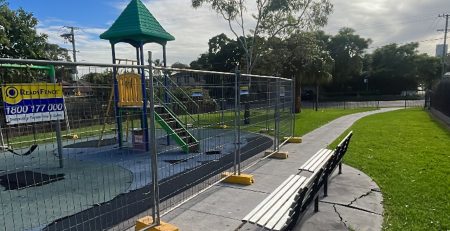
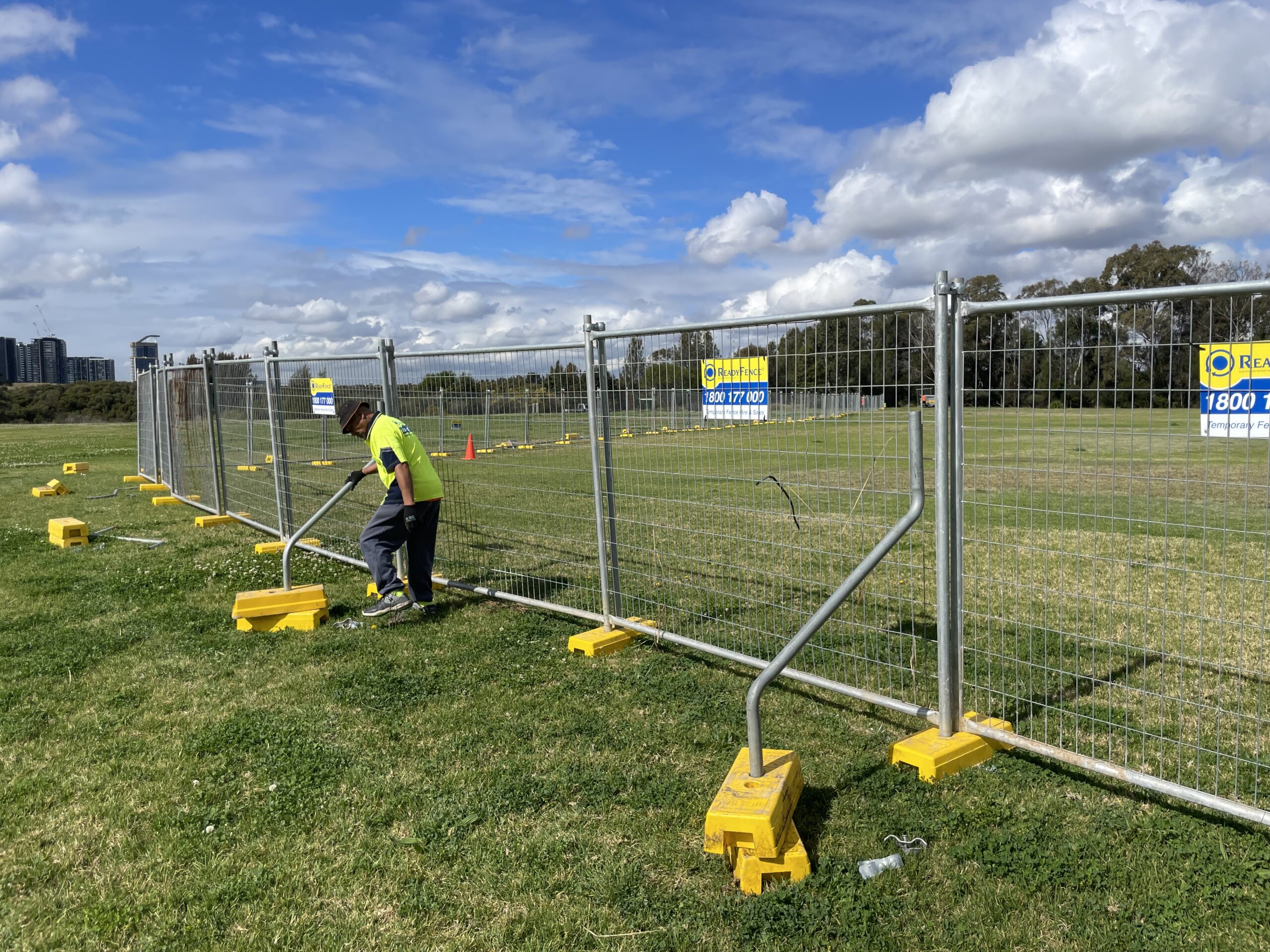
Rubber stay feet (also called rubber block feet) are the most commonly used base on Australian sites. They are lightweight, easy to handle, and interlock to keep adjacent bases aligned. They work best on:
- Flat, hard surfaces such as concrete or asphalt
- Short-term installations with moderate wind exposure
- Sites where the fence will be moved frequently
Each foot provides enough downward mass for standard conditions, and the rubber base grips hard surfaces without damaging them — important on roadways, car parks, and commercial precincts.
Concrete Block Feet
For sites with greater wind exposure, longer durations, or soft and uneven ground, concrete block feet are the preferred option. Significantly heavier than rubber alternatives, they dramatically increase the stability of the fence line and reduce the risk of displacement in adverse conditions.
Concrete feet are typically required on:
- Open construction sites with little surrounding wind shelter
- Coastal or elevated locations across NSW, QLD, and WA
- Long-duration hires lasting several weeks or months
- Sites where the fence also functions as a crowd control barrier
Ready Fence tip: In high-wind zones — particularly across northern Queensland, coastal NSW, and regional WA — always default to concrete feet unless a risk assessment confirms lighter bases are appropriate.
2. Couplers and Panel Clamps: Keeping the Line Intact
While ballast feet hold each panel upright individually, couplers are what transform a row of separate panels into a single, cohesive fence structure.
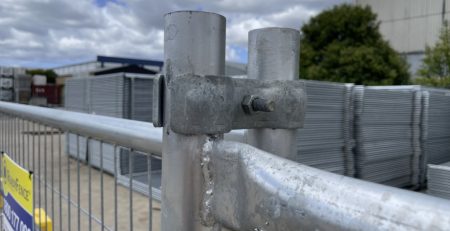
Couplers are metal or high-impact plastic devices that clamp two adjacent panels together at their overlapping vertical bars. Depending on the design, they are tightened by spanner or hand-fastened on site. Their function is to:
- Prevent panels from splaying or separating under lateral force
- Lock the fence line into a unified structure with shared load distribution
- Reduce the risk of any single panel being displaced, lifted, or removed
What to Watch Out For
Coupler quality matters. Worn, cracked, or under-tightened couplers are a common cause of fence failures — particularly after strong wind events or on busy sites where the fence sustains regular vibration from nearby machinery or traffic.
Best practice includes:
- Clamping every panel junction, not just selected points
- Inspecting couplers after severe weather events
- Replace any coupler showing signs of cracking, deformation, or loosening immediately
- Checking the full fence line as part of weekly site safety walkthroughs
3. Bracing and Prop Supports: Targeted Reinforcement
Even with quality ballast feet and properly installed couplers, certain sections of a temporary fence line are inherently more vulnerable to lateral force. This is where bracing props play an essential role.
Bracing props are angled steel supports that attach to the vertical frame of a fence panel and press against the ground at an angle, acting as a buttress against outward or inward movement. They are most critical at:
- End panels — the termination points of any fence run, where stress concentrates
- Gate panels — these experience repeated movement and lateral force from opening and closing
- Corner panels — changes in direction create outward pressure on both sides of the turn
- Wind-exposed runs — long sections facing prevailing winds on open or elevated sites
- Vehicle access zones — where accidental vehicle contact is a realistic risk
A professional fencing contractor — like the Ready Fence installation team — will identify all bracing requirements during the pre-installation site assessment. Planning for bracing upfront is always more efficient than adding it reactively after a panel failure.
4. Gate Panels: Securing Your Access Points
Gate panels are the most dynamic element of any temporary fence installation and require specific attention beyond standard securing methods.
Whether you’re installing a 1 metre personnel gate for foot traffic or a wider vehicle access gate, every gate panel should include:
- Drop bolts or ground pins to secure the gate in the closed position and prevent it from swinging freely in the wind
- Chain and padlock for sites where controlled or restricted access is required
- Bracing props on both sides of the gate opening to counter the increased stress at this point in the fence line
- Concrete feet at gate posts, regardless of what base type is used elsewhere on the run
A heavy steel gate that swings open in a gust or under crowd pressure can cause serious injury. Proper gate securing is not an add-on; it’s a fundamental part of a safe installation.
5. In-Ground Posts and Ground Anchors: Maximum Holding Strength
For installations requiring the highest level of security or stability, temporary fencing can be supplemented with physical ground-anchoring methods.
Driven Star Pickets
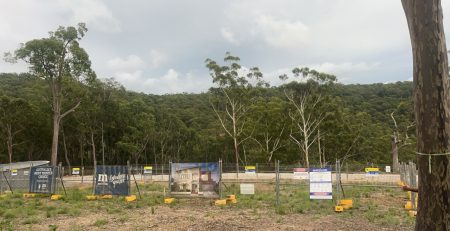
Steel star pickets driven into the ground at intervals along the fence line, and connected to the panels with wire ties or clamps, provide strong resistance to fence displacement. This method is common on:
- Long-term construction sites where the fence remains in place for months
- Rural and semi-rural locations with soft or sandy ground
- Sites where the fence must resist deliberate interference or forced entry
Screw-In Ground Anchors
Screw-in or helix ground anchors are twisted into the earth and provide excellent holding strength without the impact required for driven pickets. They are particularly appropriate for:
- Sites with surface restrictions (where impact driving isn’t permitted)
- Locations with a risk of underground services
- Grass, soft soil, or coastal sandy terrain
Both methods increase installation time and cost, but are the correct solution when site risk demands it.
6. Shade Cloth, Signage, and Wind Load: A Commonly Missed Factor
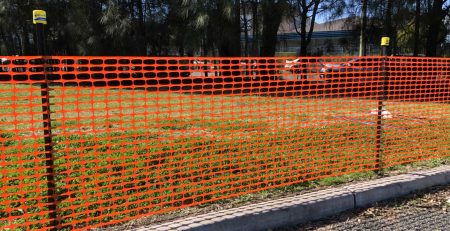
Many clients attach printed shade cloth or banner mesh to their temporary fencing, for privacy screening, site branding, or to restrict sightlines. This is entirely appropriate, but it introduces an important consideration that is frequently overlooked.
An open mesh panel allows the majority of wind to pass through. A panel covered in shade cloth or a solid banner behaves more like a sail, significantly increasing the lateral wind force acting on the fence structure. Depending on material density and wind speed, this can multiply the effective load on each base and coupler by three to five times or more.
What this means for your installation:
- When shade cloth or signage is being attached, the installation must be re-evaluated for increased wind load
- Concrete feet should be specified throughout, not just at key points
- Bracing requirements increase proportionally
- Coupler inspection frequency should increase, particularly in windy conditions
This is one of the most common factors overlooked during temporary fence installation planning — and one of the most common contributors to fence failures on otherwise well-set-up sites.
7. Compliance with Australian Standard AS 4687
Temporary fencing on commercial and industrial sites in Australia is subject to AS 4687: Temporary Fencing and Hoardings, which sets minimum requirements for:
- Structural design — wind load calculations, panel dimensions, and base weight minimums
- Material quality — galvanisation standards and corrosion resistance
- Installation practice — spacing of feet, coupler requirements, and bracing guidance
- Ongoing maintenance — inspection obligations and record-keeping
Ready Fence’s products are tested and certified to comply with Australian Standard AS 4687, giving you confidence that the equipment meets the regulatory benchmark from the moment it arrives on site.
Under WHS legislation across all Australian states and territories, principal contractors and site managers bear responsibility for ensuring their temporary fencing installation meets applicable standards. This responsibility requires active verification, not just assumption.
Practical Steps to Stay Compliant
- Confirm your fencing supplier’s products are AS 4687-certified before hire or purchase
- Include temporary fencing in your site safety management plan
- Maintain inspection records and document any maintenance or repairs
- Brief all site personnel on the fence line’s purpose and the reporting process for any damage or movement
Temporary Fencing Securing Methods: Quick Reference
| Method | Best For | Key Benefit |
| Rubber ballast feet | Hard surfaces, short-term hire | Lightweight and easy to reposition |
| Concrete block feet | Open sites, high wind, long-term | Maximum base stability |
| Couplers/clamps | All installations | Panel-to-panel structural integrity |
| Bracing props | Ends, gates, corners, exposed runs | Targeted resistance to lateral force |
| Star pickets | Long-term or high-security sites | Ground-anchored holding strength |
| Screw-in ground anchors | Soft ground, surface-sensitive sites | Strong hold without impact driving |
| Gate drop bolts & padlocks | All gate panels | Controlled access and wind safety |
Frequently Asked Questions
- How often should temporary fencing be inspected on a worksite?
At a minimum, at the start of each working week and after any severe weather event. High-traffic or high-risk sites may require daily checks. Inspections should cover all feet, couplers, bracing props, and gate hardware.
- Can temporary fencing be installed on uneven ground?
Yes, with proper planning. Ballast feet can be adjusted on moderately uneven surfaces, and ground anchors are often necessary on sloped terrain to maintain panel alignment and prevent shifting.
- Do I need shade cloth or privacy screening on my temporary fence?
It depends on your site requirements. If you’re looking to restrict sightlines, reinforce branding, or comply with council or development conditions, Ready Fence’s printed shade cloth and banner mesh is an effective addition. Just make sure your installation is set up to handle the additional wind load.
- Does Ready Fence service sites outside Sydney and Brisbane?
Yes. Ready Fence operates branches across New South Wales, Queensland, Victoria, Western Australia, South Australia, the ACT, and the Northern Territory.
- What’s the difference between temporary fence hire and sale?
Hiring is ideal for projects with a defined end date — you get delivery, installation support, and collection when you’re done. Purchasing is suited to businesses or contractors with ongoing, recurring fencing needs. Ready Fence offers both options.
Ready to Secure Your Site?
Properly secured temporary fencing is not just about keeping a fence upright. It’s about meeting your WHS obligations, protecting workers and the public, and ensuring your site perimeter performs reliably for the life of your project.
At Ready Fence, we supply and install AS 4687-certified temporary fencing across Australia — from major infrastructure and commercial construction projects through to events, pool compliance fencing, and emergency response zones. Our team will assess your site, recommend the right security method, and ensure every panel is installed to standard.
Get a free quote today or call us on 1800 177 000 — we’re ready when you are.