Temporary Fencing for Roadworks and Infrastructure Projects
Temporary fencing is essential for roadworks and infrastructure projects across Australia. From highways and utility upgrades to rail and civil construction, fencing helps protect workers, control access, integrate with traffic management, and maintain compliance with Australian standards.
Projects of this nature involve high-risk environments, including moving traffic, heavy machinery, and large work zones. Well-planned temporary fencing is critical to ensure safety, efficiency, and smooth operations.
Why Temporary Fencing Is Crucial for Roadworks
Temporary fencing goes beyond simply marking a boundary. On roadwork and infrastructure sites, it protects workers, the public, and assets. Fencing prevents unauthorised access to hazardous zones, secures equipment and materials, and helps maintain order across complex sites.
- Worker and public safety: Fencing provides a physical barrier that prevents unauthorised access to hazardous areas.
- Clear site boundaries: Helps manage construction zones and restrict access to machinery, materials, and work areas.
- Traffic management support: Works alongside cones, signage, and barriers to guide vehicles and pedestrians safely around the site.
- Equipment security: Protects high-value machinery and materials from theft or vandalism when not in use.
Without proper fencing, projects risk safety incidents, delays, and regulatory issues.
Integration with Traffic Management Systems
Large roadwork projects require fencing that works with traffic management strategies, not in isolation. Proper integration ensures safety and efficiency for both workers and road users.
Key integration points include:
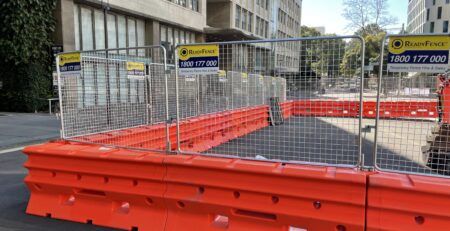
- Layered protection: Fencing is used alongside traffic barriers, cones, and signage to guide vehicles and pedestrians safely.
- Designated pedestrian paths: Clearly marked walkways prevent accidental entry into construction zones.
- Controlled entry points: Secure gates allow authorised workers and machinery to move in and out without disrupting traffic.
- Adaptable layouts: As work progresses, fencing may be repositioned to reflect changes in site zones and traffic flows.
Proper integration ensures fencing enhances safety rather than obstructing operations.
Meeting Australian Standards
Temporary fencing for infrastructure projects must meet regulatory requirements and industry standards. Compliance ensures durability, safety, and accountability.
Standards and regulations include:
- AS 4687 – Temporary Fencing and Hoardings: Defines structural requirements and installation guidelines.
- AS 1742 – Manual of Uniform Traffic Control Devices: Provides best practices for traffic management around work zones.
- Workplace Health and Safety Regulations: Ensure construction zones are protected from unauthorised access and hazards.
Following these standards helps prevent site incidents and ensures your fencing is fit for purpose in high-traffic, high-risk environments.
High-Visibility Requirements
Visibility is critical for roadwork fencing:
- High-visibility panels or mesh allow drivers and pedestrians to see the construction zone from a distance.
- Reflective markings or strips improve visibility in low-light or nighttime conditions.
- Consistent positioning and alignment prevent confusion and reduce the risk of collisions.
- Integration with site lighting may be necessary for 24-hour or night-time works.
Fencing that is clearly visible helps protect both workers and the public while maintaining compliance.
Handling Large-Scale Projects and Logistics
Roadworks and infrastructure projects often span kilometres, requiring careful logistical planning. Fencing needs to cover multiple zones efficiently while remaining adaptable to changes.
Key considerations include:
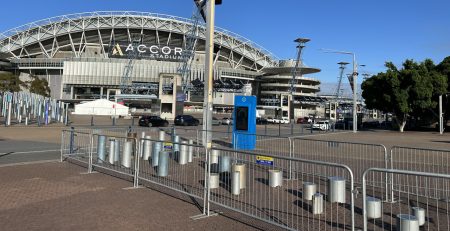
- Extensive coverage: Securing multiple work areas, storage zones, and access points.
- Phased installation: Moving and reconfiguring fencing as the project progresses.
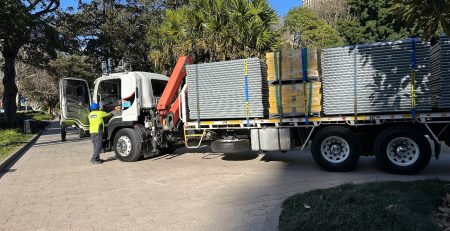
- Efficient transport and handling: Proper movement of panels, stabilisers, and bases across large sites.
- Coordination across contractors: Ensuring consistency and safety standards are maintained throughout the project.
Planning logistics reduces delays and keeps the worksite safe and organised.
Installation and Maintenance Best Practices
Temporary fencing in roadwork settings must remain secure under environmental and operational stress:
- Stabiliser feet and ballast: Correct installation prevents panels from shifting due to wind or vibration from traffic.
- Couplers and bracing: Ensure panels remain aligned and connected along long runs.
- Regular inspections: Check for loose fittings, misalignment, or damage, particularly after severe weather or heavy traffic impact.
- Adjustments as work progresses: Relocate or reconfigure fencing to match updated work zones and traffic flows.
Consistent installation and maintenance are key to safe, uninterrupted project operations.
Partnering with Ready Fence for Roadwork Projects
Temporary fencing for large infrastructure works demands both expertise and reliable products. Ready Fence supports Australian roadworks and infrastructure projects with tailored solutions designed for scale, safety, and compliance.
- High-quality fencing systems built for durable, large-scale use
- Expert guidance on standards compliance and traffic integration
- Professional installation and relocation services across evolving work zones
- Ongoing support to maintain safety, stability, and visibility throughout the project
With Ready Fence, your site fencing becomes a reliable partner in managing complex, high-risk projects. Contact us today to discuss your roadwork or infrastructure fencing needs.
Get a free quote today or call us on 1800 177 000 — we’re ready when you are.