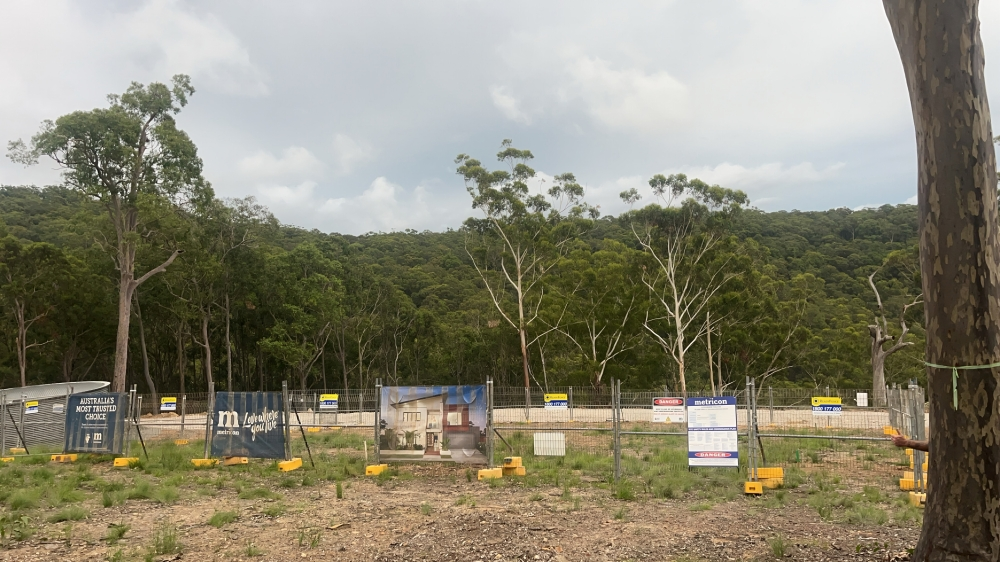
Construction Sites: Compliance & Security Measures You Can’t Ignore
Construction sites are high-risk, tightly regulated environments. Between heavy machinery, excavation zones, subcontractor movement, material storage, and public interface areas, compliance and security are operational necessities — not optional safeguards.
Failure to meet regulatory obligations can lead to:
- Improvement or prohibition notices
- Financial penalties
- Project delays or shutdowns
- Insurance complications
- Reputational damage
A compliant, secure site protects people, assets, and project timelines from day one.
The Regulatory Framework
Construction fencing compliance in Australia is governed by:
- The Work Health and Safety Act 2011
- Codes of Practice issued by Safe Work Australia
- AS 4687-2022 – Temporary Fencing and Hoardings
These regulations require duty holders to eliminate or minimise risk so far as reasonably practicable. One of the most fundamental controls in achieving this is compliant temporary fencing.
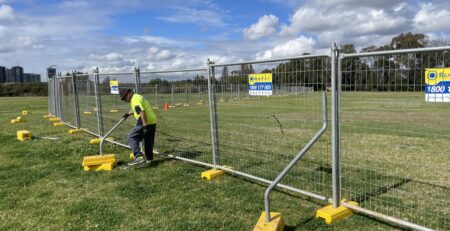
Temporary fencing establishes the legal site boundary and remains a core safety control throughout the build lifecycle.
Essential Compliance Requirements for Construction Sites
1. Secure and Continuous Site Perimeter
Every active construction site must have a clearly defined boundary that prevents unauthorised access.
Compliant perimeter fencing should:
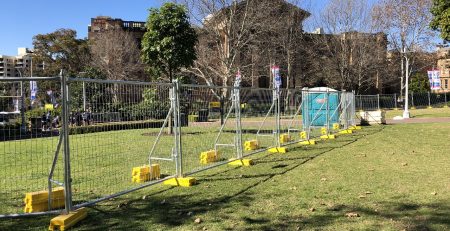
- Be a minimum of 2 metres high
- Use anti-climb mesh or design
- Have no gaps beneath or between panels
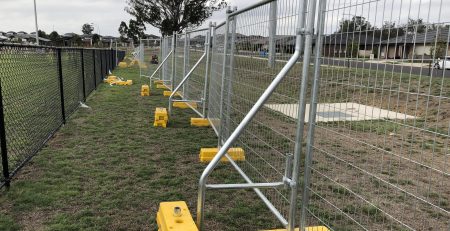
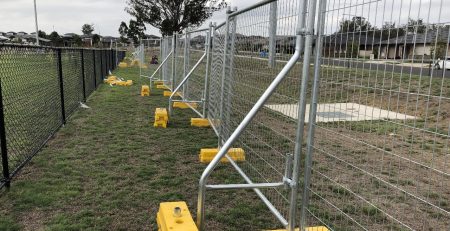
- Be properly stabilised with ballast or bracing
- Include lockable gate access
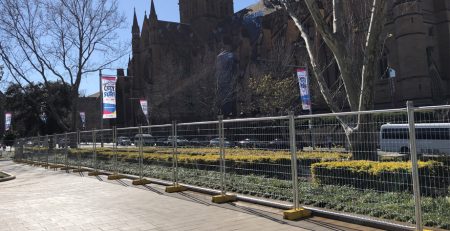
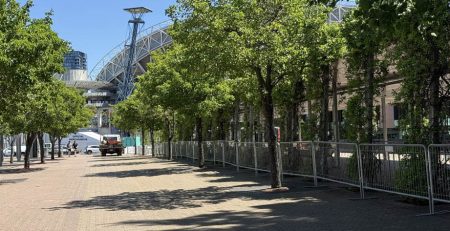
In urban or public-facing environments, fencing must sit flush with the ground level to prevent access underneath panels.
2. Controlled Access & Gate Management
Access control reduces liability and strengthens security.
Best practice includes:
- Defined vehicle and pedestrian entry points
- Lockable gates
- Limited access locations to improve monitoring
- Clear site entry protocols
Unsecured gates remain one of the most common compliance failures identified during inspections.
3. Structural Stability & Installation Standards
Temporary fencing must withstand environmental conditions and site-specific challenges.
Compliance requires:
- Wind-rated panels
- Certified installation configurations
- Adequate spacing and stabilisation
- Reinforcement for exposed or elevated sites
AS 4687-2022 outlines wind-load and structural requirements that installations must meet. Improper spacing or insufficient ballast can result in panel collapse, creating serious safety risks.
4. Safety Signage & Site Communication
Construction sites must clearly communicate hazards and access restrictions.
Required signage typically includes:
- “Authorised Personnel Only”
- PPE requirements
- Hazard warnings
- Emergency contact details
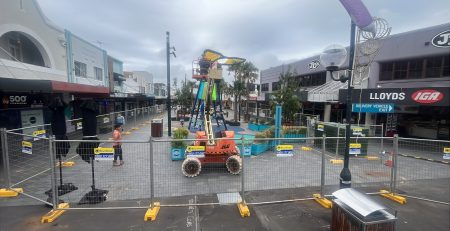
Signage must be visible, durable, and positioned at all access points. Missing signage can trigger compliance notices during regulatory inspections.
5. Internal Hazard Segregation
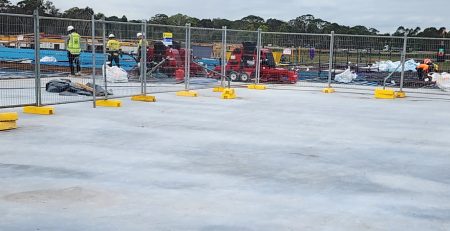
On larger or multi-stage sites, internal temporary fencing is necessary to isolate:
- Excavation zones
- Crane swing areas
- High-risk plant movement zones
- Restricted material storage areas
Using high-visibility barrier systems improves safety while maintaining clarity of compliance.
Strengthening Site Security Beyond Minimum Compliance
Meeting baseline legal requirements protects you from penalties. Strengthened security measures protect your assets and schedule.
– Visual Deterrence & Theft Reduction
Reducing visibility into the site reduces the risk of opportunistic theft. Measures include:
- Privacy mesh or shade cloth
- Anti-climb panel systems
- Clear warning signage
A secure-looking site acts as a visible deterrent.
– After-Hours Protection
Construction sites are frequent targets for theft and vandalism outside working hours.
Enhanced measures may include:
- Solar-powered CCTV systems
- Motion-activated lighting
- Reinforced locking systems
Layered protection significantly reduces exposure, particularly for long-term or high-value projects.
– Ongoing Inspection & Maintenance
Compliance is continuous, not a one-time setup.
Best practice includes:
- Scheduled perimeter inspections
- Immediate rectification of damaged panels
- Post-weather-event checks
- Documented maintenance logs
Inspection records demonstrate due diligence and strengthen audit readiness.
Why Ready Fence Is the Preferred Choice for Construction Sites
For construction companies, compliance depends not just on products — but on certified systems, proper installation, and operational reliability.
Ready Fence is widely used across infrastructure, civil, residential, and commercial projects due to its structured compliance approach.
– Certified to Australian Standards
- Fencing systems aligned with AS 4687-2022
- Engineered configurations for wind compliance
- Professionally installed systems
This ensures projects meet regulatory expectations from mobilisation through completion.
– Nationwide Experience & Capability
Operating since 1997, Ready Fence has supported:
- Major construction firms
- Civil contractors
- Mining operators
- Government projects
This experience reflects consistent compliance performance across diverse site conditions.
– Rapid Deployment & Professional Installation
Construction timelines require efficient mobilisation.
- Fast delivery
- Professional installation teams
- Scheduled removal services
- Flexible hire and sale options
This minimises downtime and ensures sites remain compliant from day one.
– Integrated Security Solutions
- Solar-powered CCTV systems
- AI-enabled monitoring
- Flexible rental agreements
This integrated approach enhances both compliance and asset protection.
Construction Site Compliance & Security Checklist
To maintain a compliant and secure construction site:
- Install continuous 2m anti-climb perimeter fencing
- Use certified wind-rated installation configurations
- Secure and lock all access gates
- Display compliant signage at each entry point
- Segregate internal high-risk zones
- Implement after-hours security measures
- Conduct and document routine inspections
Construction site compliance and security are foundational to safe and uninterrupted project delivery. Temporary fencing is not simply a boundary — it is a legally mandated safety control, a theft deterrent, and a core risk management system.
When correctly specified, professionally installed, and maintained throughout the project lifecycle, it protects workers, the public, and your operational continuity.