Can Temporary Fencing Fall Over in Strong Winds?
Temporary fencing is a reliable solution for securing construction sites, events, and worksites across Australia. But one question we hear often from site managers and event organisers is simple — can temporary fencing fall over in strong winds?
In short, yes. If it isn’t properly specified, installed or reinforced, temporary fencing can topple, become unstable or fail during high wind conditions. Understanding how wind interacts with your fencing system and choosing the right components can make all the difference in safety and compliance on your site.
Understanding Wind Load — Why It Matters
Wind load refers to the force of wind acting on a structure’s surface. In fencing terms, this force increases with both wind speed and panel surface area.
- Taller fences catch more wind.
- Solid hoardings act like sails.
- Privacy mesh and
- banners increase effective wind resistance.
Wind pressure doesn’t scale linearly; it grows exponentially with wind speed, meaning a moderate increase in wind can translate into dramatically heavier loads on your temporary fencing.
Panels that are not adequately stabilised or weighted can be pushed over, slide, or twist out of alignment, especially on exposed sites or in coastal or storm‑prone regions.
Wind Ratings & Australian Standards
Temporary fencing systems aren’t all created equal. High‑performing systems are tested for wind resistance and engineered to specific standards.
In Australia, the temporary fencing standard AS 4687 sets wind resistance requirements, with a common minimum baseline wind speed of Beaufort Force 7 (~54 km/h).
Key takeaways from wind load references include:
- Panel design and material affect how wind forces are transferred. Mesh panels with open areas allow air to pass through, reducing the overall wind load.
- Solid panels have higher wind loads and require stronger bases and anchoring systems.
- Wind load increases with the square of wind speed — doubling wind speed roughly quadruples the force on your structure.
So yes, temporary fencing can fall over if the wind force exceeds what the system has been rated for and what the support configuration can handle.
Stabiliser Feet, Bracing & Best Practices
One of the biggest themes in top fencing guides is the importance of stabilisation systems:
1. Use Engineered Stabiliser Feet and Bracing
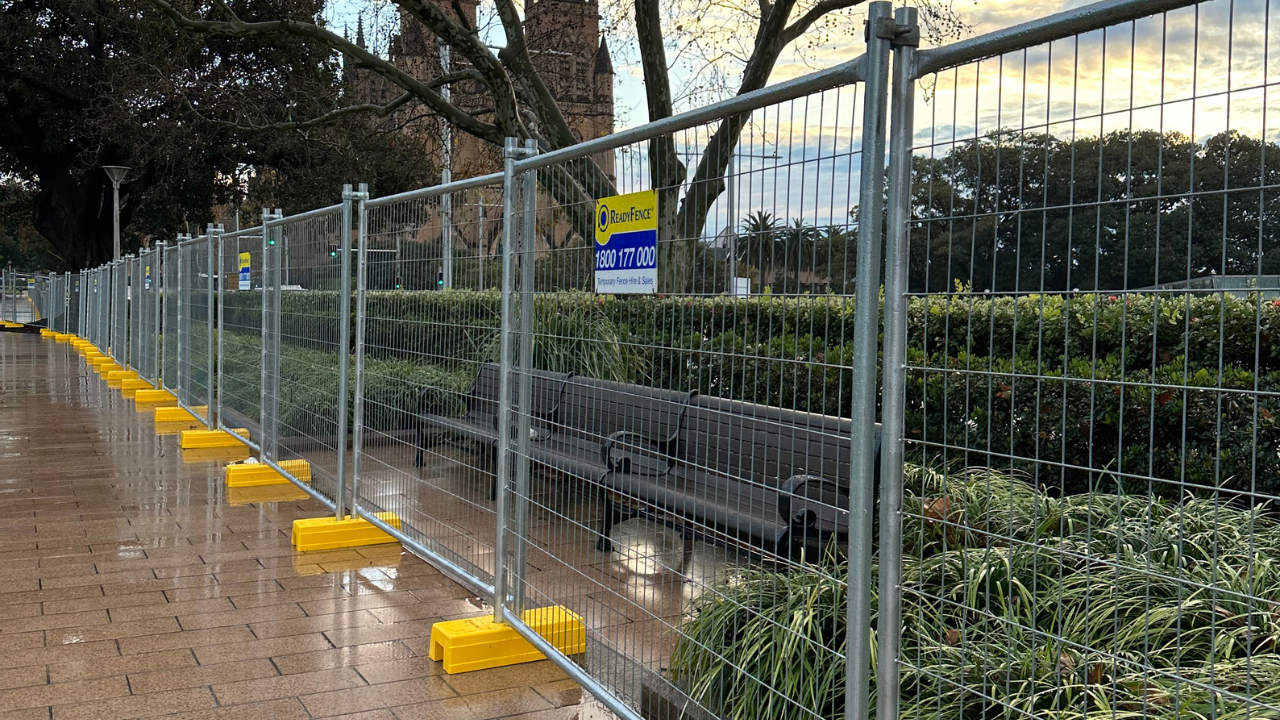
The foundation of a stable temporary fence is its feet and braces. Standard panel feet provide basic support, but on exposed sites, you’ll want to consider:
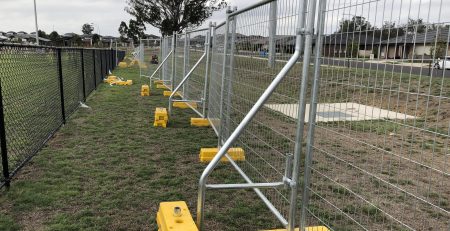
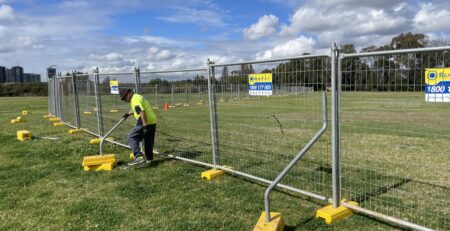
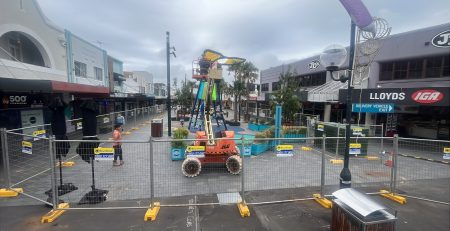
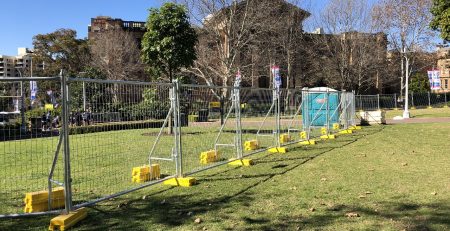
- Heavy-duty stabiliser feet – wider, heavier base plates that resist tipping and shifting
- Stays or braces – angled supports that connect panels back to the ground or to ballast points, especially at corners and long sections
- Wind braces – purpose‑designed structural supports that significantly increase wind‑load capacity along a run
Good bracing doesn’t just add weight — it changes how wind forces transfer through the system, reducing the risk of panels lifting or leaning.
2. Add Ballast for Extra Weight
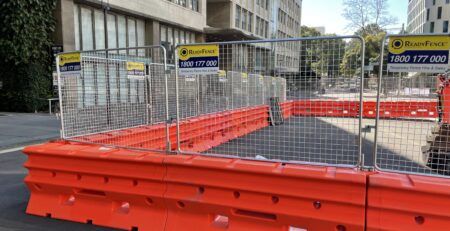
On hard surfaces like asphalt, concrete slabs or compacted soil, where driven posts aren’t feasible, ballast becomes your primary stabilising method. Popular options include:
- Interlocking concrete ballast blocks — heavy, modular and quick to position along fencing lines
- Water‑filled ballast containers — effective on short‑term jobs and easy to move
- Sandbags or engineered ballast mats — flexible solutions for uneven sites or temporary events
The key is distributed weight — placing ballast at regular intervals and at anchor points minimises overturning risk from wind gusts.
3. Install Bracing at Corners & Long Runs
Stress is highest at corners and long, continuous sections: bracing these areas reduces leverage from wind loads and keeps panels aligned.
Best Practices for Storm‑Prone Areas in Australia
Australia’s varied weather means some regions are more exposed to high winds and storms. For sites in Queensland, NSW coastlines, South Australia, or areas affected by seasonal lows, you should:
- Assess local wind patterns ahead of installation using BOM forecasts and history.
- Specify wind‑rated fencing and documented testing for your site conditions.
- Use bracing and stabilisers on all long runs and corners.
- Add ballast where driven posts cannot be used.
- Select mesh or permeable panel options where feasible; they reduce wind pressure compared with solid hoardings.
- Inspect your fence regularly during windy periods and after storm events to tighten connections and check ballast.
Proactive planning prevents collapsing fences, reduces liability, and keeps projects on track.
Conclusion — Yes, But Not If You Prepare
Temporary fencing can fall over in strong winds, but with proper planning, stabilisation and configuration, it’s entirely possible to install systems that perform reliably even in windy or storm‑prone locations.
By choosing wind‑rated fencing, using engineered stabiliser feet, applying ballast, and following best practices used by industry leaders, you’ll protect your site, your crew, and your reputation.
If you’d like, I can also tailor this post with a specific call‑to‑action and local case studies from Australian projects. Would you like a version with images and a downloadable PDF version for social channels?